
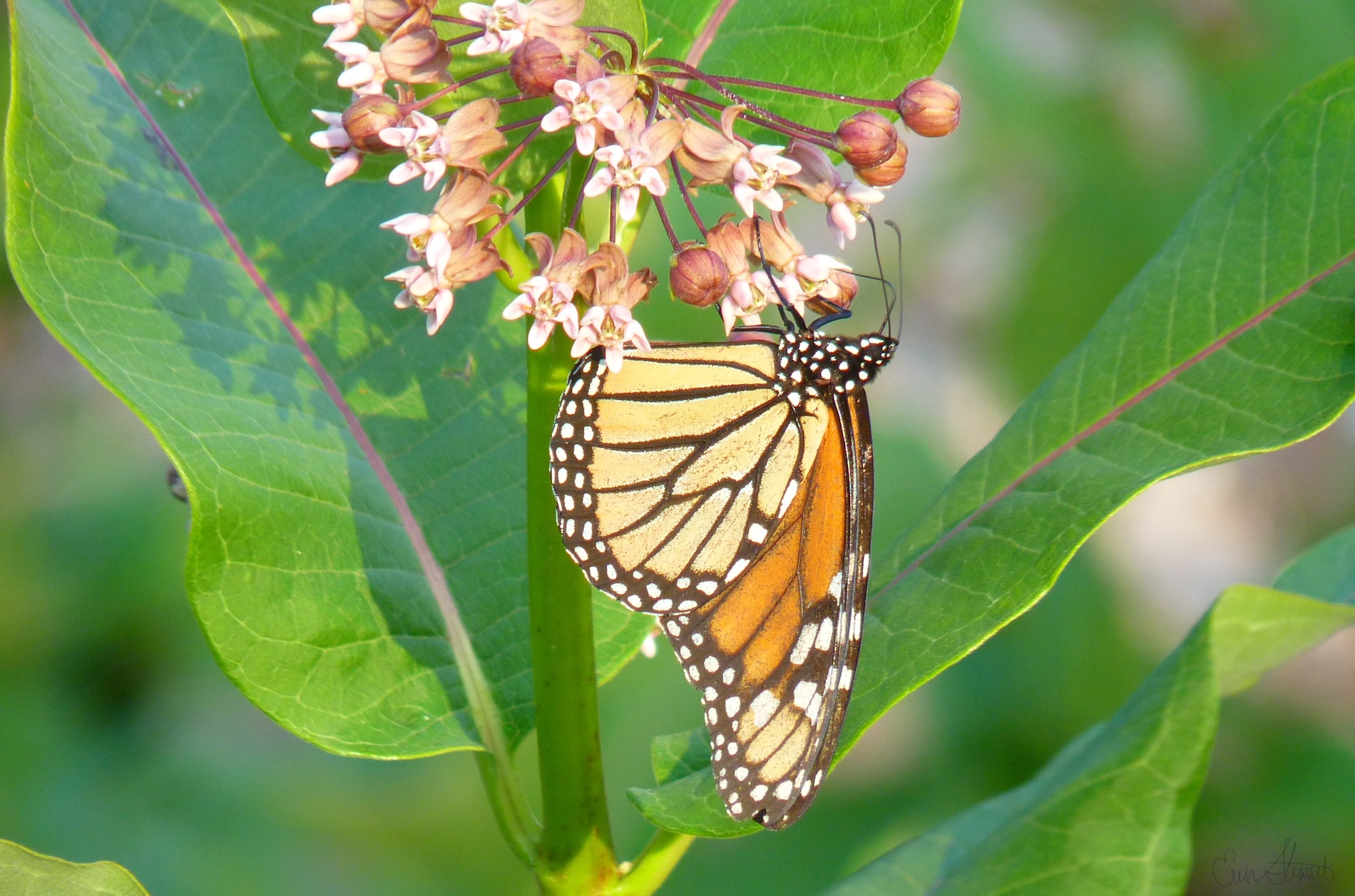
The monarch's gorgeous orange wings, with their golden hue and black and white spots, have been seen in yards, fields, and hillsides in Vermont. We're so grateful to see their return.
Beyond their beauty and grace, monarchs are important pollinators that keep our ecosystem rejuvenating and healthy. Adult monarchs feed on a wide variety of flowering plants, protect the survival of our native pollinator plants, keep our summer flora reproducing and robust, and help indicate the health of our environment.
Monarchs specifically protect the survival of milkweed, a pollinator plant that monarch caterpillars feed exclusively on. Milkweed is an incredibly abundant pollinator plant that blooms through mid-summer, filling "nectar gaps" or times when less flowers occur. Their blooms contain globular clusters of small and potently fragrant flowers that are important food sources for bees, wasps, moths, and other butterflies. Their relationship with monarch caterpillars is especially unique: milkweed leaves contain toxins that the caterpillars ingest and store, which helps protect them from predators by making them an unappealing snack.
Monarchs also have one of the more jaw-dropping migrations of our birds and insects—migrating thousands of miles between Canada and Mexico every year and spanning multiple generations as make their way from Mexico to the Northern U.S. The first few generations travel hundreds of miles before laying eggs and dying, their offspring continuing the journey. These generations have a lifespan of 2-6 weeks. The last generation is born in late summer or early fall, and is considered the "super generation" as their life span is much longer - ranging 8-9 months. This generation also enters a hormonally controlled pause of their reproductive development, allowing them to focus on storing energy so they can complete the thousands-of-miles journey from the northern United States back to Mexico. This last generation makes the full migration solo, an incredible feat for a species that weighs roughly half the weight of a paperclip.
The mere presence of monarch butterflies is an indicator of a healthy ecosystem. Their populations reflect the health of our grasslands, meadows, and forest edges. Sadly, their numbers have been steadily declining over the past couple decades, from habitat loss and reduced biodiversity due to urban, residential, and agricultural development of our prairies, fields, and forest edges.
How you can help monarchs:
- Plant native milkweed species, a necessity to monarchs (and a beautiful and fragrant flower for your backyard);
- Keep your backyard full of pollinator plants that bloom throughout summer into early fall. Some great native pollinators that last throughout summer in addition to milkweed are comfrey, Joe Pye weed, bee-balm, anise hyssop, cardinal flower and Canadian goldenrod;
- Avoid using pesticides on your lawn and gardens (as this will kill caterpillars and butterflies that come in contact with sprayed plants);
- Try to keep available areas of your lawn or adjacent fields undisturbed, as to protect the formation of chrysalises and the birth of new monarchs.
We try to harbor a safe sanctuary for monarchs here at BEEC, and we welcome you to walk our trails dawn until dusk to check out new arrivals of monarchs and the beauty of milkweed flowers and goldenrod as it blooms throughout summer on our wild hillsides.